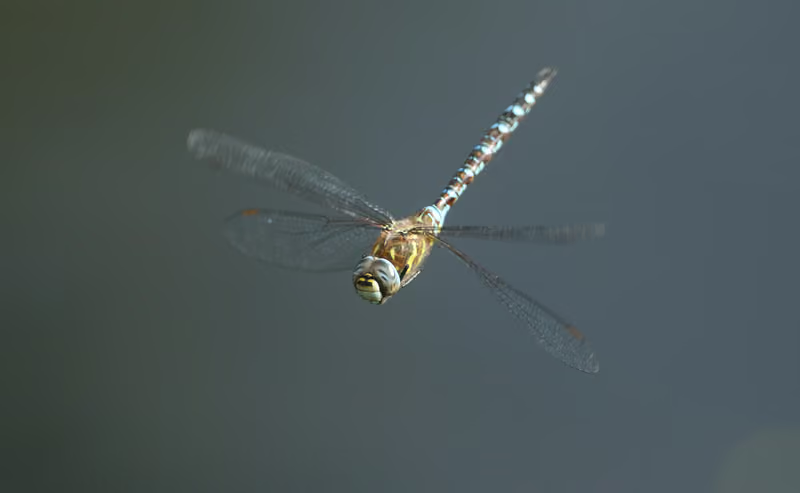
Many different types of animals may be found in the garden. Each animal has particular characteristics which enable us to place it in a group. When classifying an animal you first have to decide whether it is a vertebrate (an animal with a backbone) or an invertebrate (an animal without a backbone). The invertebrates are by far the most numerous creatures in any habitat; these are the mini-beasts which include insects, worms, spiders, slugs, woodlice, centipedes and millipedes.
Vertebrate animals are divided into 5 main groups:-
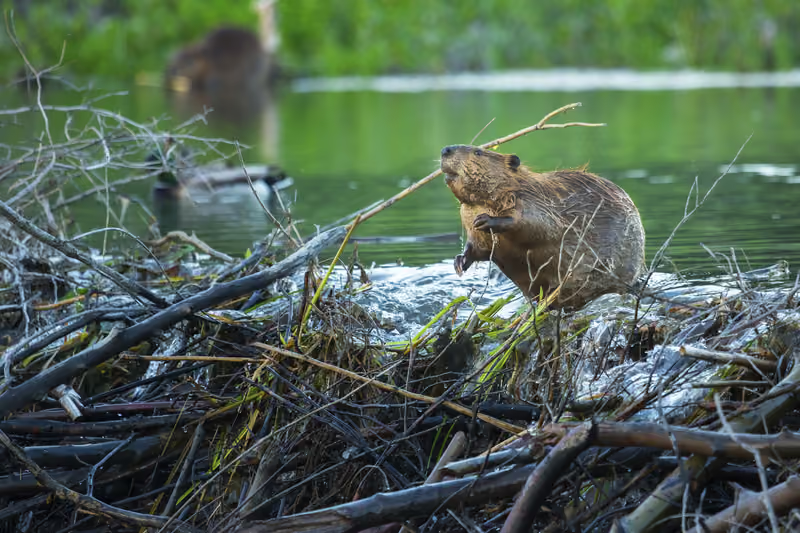
- Mammals warm-blooded with hair or fur. Young are fed on milk. e.g. fox, hedgehog, mouse, squirrel.
- Birds warm-blooded with feathers. Young hatch from eggs incubated by parents. e.g. blackbird, robin, blue tit, tawny owl.
- Reptiles cold-blooded with hard, scaly skin. Eggs laid on land. Live mainly on dry land. e.g. grass snake, common lizard, slow worm.
- Amphibians cold-blooded with soft, thin skin. Eggs laid in water. Adults can live on land or in water. e.g. frog, toad, newt
- Fish cold-blooded with soft scales. Can only live in water. Breathe through gills. e.g. stickleback

To which group do these animals belong? In which of the garden habitats would you find them living?
Table of Contents


URL Copied to Clipboard
Preparing your document
Explore Related Resources




No items found.



No items found.
No items found.


Our Supporters




.avif)